

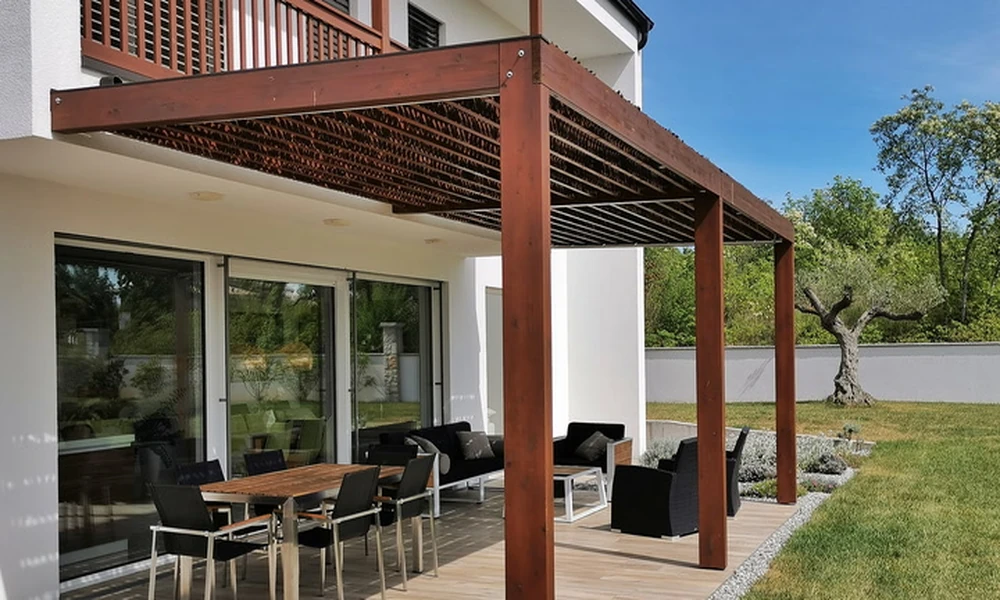
My neighbor spent $14,000 on a beautiful cedar patio cover and used it maybe nine times last summer. The problem was never the wood. He faced it west, left the beams at eight feet, and created an oven that trapped heat instead of moving it. Watching him eat dinner indoors while his new structure glowed in the sunset taught me more about patio covers than any brochure ever could.
If you’re planning a cover in Modesto or anywhere in the Central Valley, you’re dealing with a specific set of conditions: triple-digit July afternoons, low humidity, intense UV, and a handful of winter storms that test every fastener on the frame. Get the orientation, height, and material right, and you’ll double the usable months of your backyard. Get them wrong, and you’ll own the most expensive shade sail in the neighborhood. Here’s how to think it through before anyone shows up with a nail gun.
Why Orientation Beats Material Almost Every Time
Homeowners obsess over whether to build with wood, aluminum, or vinyl. Meanwhile, a west-facing cover with no adjustment for the sun’s path will cook you no matter what it’s made of. The sun in the Central Valley swings high and brutal through the afternoon, and by 5 p.m. it’s raking in low from the west at an angle that slips right under a shallow roof.
Walk outside at 4 p.m. in July and stand exactly where you want the seating area. Note where the sun hits your face, your shoulders, and the spot where the table will sit. That’s your real design brief. A cover that blocks noon sun but ignores the 4 to 7 p.m. window solves about half the problem. According to the Department of Energy, proper shading of windows and outdoor living areas can meaningfully reduce heat gain into the home, which matters when your back wall faces the same sun your patio does.
If the sun comes in low and hard, you have three honest options: extend the roof depth on that side, add a vertical screen or shade wall, or install adjustable louvers you can tilt into the sun’s path. I’d choose louvers every time on a west exposure. The extra cost buys you a season of comfortable evenings.
The Height Question Nobody Asks About
Standard patio covers land somewhere between eight and ten feet at the beam. That range exists for a reason, but it’s a starting point, not a rule. The lower the roof, the more shade it casts and the less breeze moves underneath. The higher it goes, the more air you get and the less shade you keep.
Here’s the tradeoff in plain terms. An eight-foot flat cover feels enclosed and dim and gets stifling on a still afternoon, because hot air pools under the deck and has nowhere to go. A ten or twelve-foot cathedral or gable style gives heat a place to rise and escape, and it makes the space feel like an actual room. The cost difference is real, mostly in framing and engineering, but the comfort difference is not subtle.
One more thing: fire. Wildfire smoke and dry winds are part of life in this valley now, and the National Weather Service office in Sacramento tracks the heat and wind patterns that drive our worst air days. When you’re choosing between a roof that traps air and one that vents, think about which one you’d rather sit under on a smoky evening in August. You can follow local conditions at the National Weather Service.
Permits, Setbacks, and the Paperwork You Can’t Skip
This is where a lot of DIY plans fall apart. A freestanding cover and an attached cover are treated differently, and setbacks from property lines change depending on which one you’re building. A cover attached to the house usually rides under the same rules as the structure it touches. A detached one often gets classified on its own, which can trigger different setback requirements and different inspection steps.
California also has specific rules about attached patio covers and how they’re reviewed, and the state’s building standards are administered through the Department of Housing and Community Development. Your city or county will have its own overlay on top of that. Pull the requirements before you buy a single board, because a cover built in the wrong spot can mean tearing it out. I’ve watched that happen twice on my own street.
If paperwork makes your eyes glaze over, this is exactly the part worth handing to a professional. A Patio Cover Contractor in Modesto CA who pulls permits weekly already knows the local inspectors, the setback quirks, and the engineering letters your plan needs. That knowledge is worth more than the labor savings of a weekend build.
Matching the Material to Your Actual Life
Every material has a personality, and yours has to match it.
- Wood looks warm and ages into something with character, but it wants staining every couple of years. Great if you enjoy small maintenance projects. Bad if you don’t.
- Aluminum shrugs off sun and rain with almost no attention. It reads more modern and comes in colors that match most stucco. This is my default recommendation for valley homeowners who want to forget the cover exists.
- Insulated panel roofs block radiant heat in a way solid wood doesn’t, and they cut noise from rain. Worth the upgrade if you plan to use the space during monsoon-season evenings.
- Louvered systems give you control, but they cost more and have moving parts. Buy from someone who will still be around to service them in five years.
Budget-wise, most homeowners end up choosing between a basic flat cover and something with more structure and control. Assume the louvered and insulated versions run meaningfully higher, and assume engineering, permits, and electrical for lights or fans add another layer. Anyone quoting you a single number without walking the site is guessing.
A Quick Planning Sequence You Can Run This Week
- Stand in the target spot at 4 p.m. and mark where the sun actually strikes.
- Decide attached or freestanding, because that decision drives your setbacks.
- Call your city planning desk and ask what’s required for your specific case.
- Pick your material based on how much upkeep you’ll genuinely tolerate.
- Get two or three site visits, not phone quotes, and ask each one how they handle the low western sun.
- Confirm who pulls the permit, who handles the engineering, and what the warranty actually covers.
The last item matters more than people think. Ask whether the warranty covers the finish, the frame, and the hardware separately, and get it in writing before you sign. Vague promises evaporate the moment something rusts.
What You’re Really Buying
A patio cover isn’t a roofing product. It’s square footage you get to use without paying to cool it. Done right, it turns a blazing concrete slab into the room where your family eats dinner from April through October. Done carelessly, it becomes an expensive reminder that shade is a design problem, not a shopping decision.
So before you compare quotes, spend one afternoon outside with a notebook and pay attention to where the heat actually lands. Then ask yourself the only question that matters: do I want to fight this sun every summer, or design around it once?
